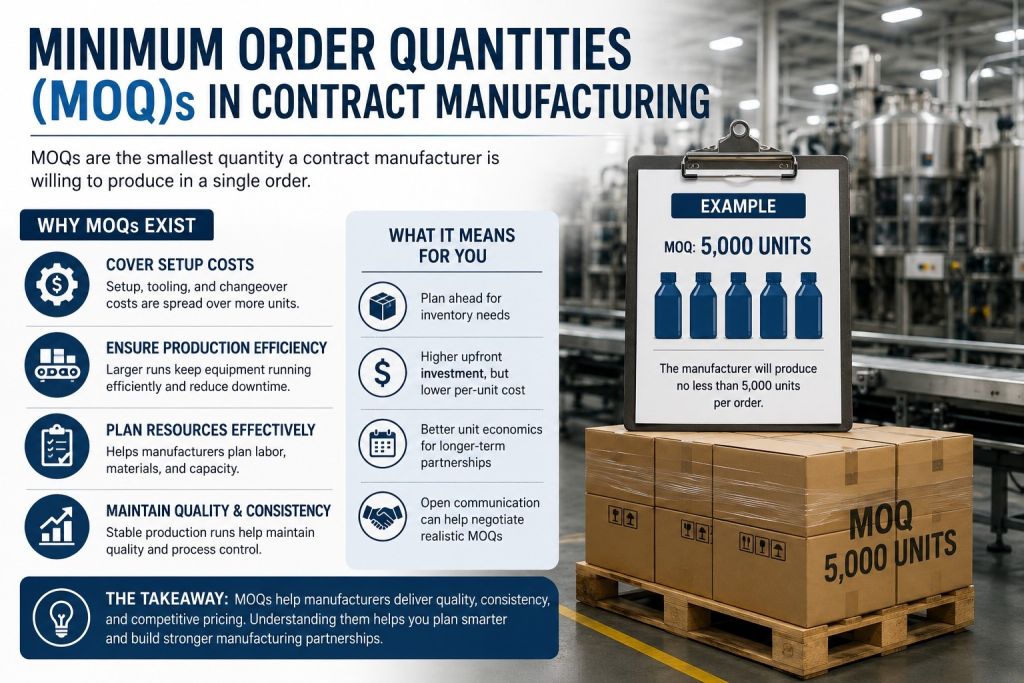
 In the fast-evolving landscape of cosmetics manufacturing in India for 2026, one of the most critical factors influencing brand success is Minimum Order Quantity (MOQ). Whether you are launching a new skincare line, expanding your haircare range, or entering the ayurvedic and home care segment, understanding MOQ is essential for cost efficiency, scalability, and profitability.
As India continues to rise as a global manufacturing hub, companies like Daffy Group (www.daffygroup.com) are redefining how brands approach contract manufacturing by offering flexible, scalable, and innovation-driven solutions across cosmetics, skincare, haircare, ayurvedic, and home care products.
What is MOQ in Contract Manufacturing?
Minimum Order Quantity (MOQ) refers to the smallest number of units a manufacturer is willing to produce per order. It is a key factor in determining production feasibility, pricing, and supply chain efficiency.
In contract manufacturing, MOQ depends on several variables:
Product type (skincare, haircare, home care, etc.)
Raw material sourcing
Packaging requirements
Manufacturing complexity
Custom formulation needs
For emerging brands in 2026, MOQ plays a vital role in balancing budget constraints with market entry strategies.
Why MOQ Matters in Cosmetics Manufacturing in India for 2026
As the demand for personalized and niche beauty products grows, MOQ strategies are evolving. Traditionally, high MOQs created barriers for startups. However, modern contract manufacturers in India are adapting to support both startups and large-scale brands.
India’s growing dominance in global manufacturing, has led to more flexible MOQ models, making it easier for brands to launch without heavy upfront investment.
Key Benefits of Optimized MOQ:
Lower financial risk for new brands
Faster product launches
Efficient inventory management
Scalability for growing demand
Factors That Influence MOQ in Contract Manufacturing
1. Product Category
Different product categories come with different MOQ requirements. For example:
Skincare products may require moderate MOQs due to formulation complexity
Haircare products often have scalable production batches
Home care products like detergents may require higher MOQs due to bulk manufacturing
2. Custom vs Private Label Manufacturing
Private label products generally have lower MOQs because formulations are pre-developed. In contrast, custom formulations require higher MOQs due to R&D, testing, and raw material sourcing.
Brands entering specialized segments such as ayurvedic cosmetics can explore tailored manufacturing solutions.
3. Packaging Requirements
Customized packaging—such as unique bottles, eco-friendly materials, or premium designs—can increase MOQ due to supplier constraints. Standard packaging options often allow for lower minimum quantities.
4. Raw Material Sourcing
Certain natural or imported ingredients require bulk procurement, which can impact MOQ. This is especially relevant in clean beauty and ayurvedic formulations readmore…
MOQ Challenges Faced by Beauty Brands
While MOQ is essential for manufacturing efficiency, it can also pose challenges:
High upfront investment
Risk of unsold inventory
Limited flexibility for testing new products
Storage and logistics concerns
Many brands make critical mistakes while outsourcing manufacturing, particularly when they fail to align MOQ with market demand.
Understanding these pitfalls helps brands make smarter, data-driven decisions.
How Daffy Group Solves MOQ Challenges in 2026
As a leading contract manufacturer in India, Daffy Group offers flexible MOQ solutions tailored to the needs of startups, D2C brands, and established companies.
✅ Flexible Production Capabilities
Daffy Group enables brands to start small and scale efficiently as demand grows.
✅ End-to-End Manufacturing Support
From formulation and testing to packaging and logistics, every stage is managed seamlessly.
✅ Cost Optimization
Efficient sourcing and production processes help reduce overall costs, even with lower MOQs.
✅ Custom & Private Label Options
Brands can choose between ready-made formulations or fully customized products.
✅ Multi-Category Expertise
Daffy Group manufactures across:
Cosmetics
Skincare
Haircare
Ayurvedic products
Home care solutions
This versatility allows brands to diversify their portfolio without dealing with multiple vendors.
MOQ Trends in Cosmetics Manufacturing for 2026
The concept of MOQ is evolving rapidly in 2026, driven by changing market dynamics and consumer expectations.
1. Rise of Low-MOQ Manufacturing
Manufacturers are increasingly offering low MOQs to support startups and niche brands entering the market.
2. Demand for Customization
Consumers want unique, personalized products, pushing manufacturers to adapt flexible production models.
3. Growth of D2C Brands
Direct-to-consumer brands prefer smaller batches to test products before scaling.
4. Sustainability Considerations
Lower MOQs help reduce waste and support eco-friendly production practices.
Strategic Tips for Brands Managing MOQ
To succeed in cosmetics manufacturing in India, brands should:
Start with small batches to test market response
Choose manufacturers offering scalable MOQ options
Focus on high-demand products first
Align MOQ with sales forecasts and distribution strategy
Partner with experienced manufacturers like Daffy Group
The Future of MOQ in India’s Manufacturing Ecosystem
As India strengthens its position in global cosmetics manufacturing, MOQ flexibility will become a key competitive advantage. Manufacturers who can balance cost efficiency with customization will lead the industry.
Daffy Group is at the forefront of this transformation, enabling brands to innovate, scale, and succeed in a highly competitive market.
Understanding Minimum Order Quantities (MOQ) in contract manufacturing in India is essential for any brand aiming to succeed in 2026. With the right strategy and manufacturing partner, MOQ can become a powerful tool for growth rather than a limitation.
By partnering with Daffy Group (www.daffygroup.com), brands gain access to flexible manufacturing solutions, industry expertise, and end-to-end support across cosmetics, skincare, haircare, ayurvedic, and home care products.
If you’re ready to launch or scale your beauty brand, now is the time to leverage India’s manufacturing strength and embrace smart MOQ strategies for long-term success.